 Mahjong Racer Games
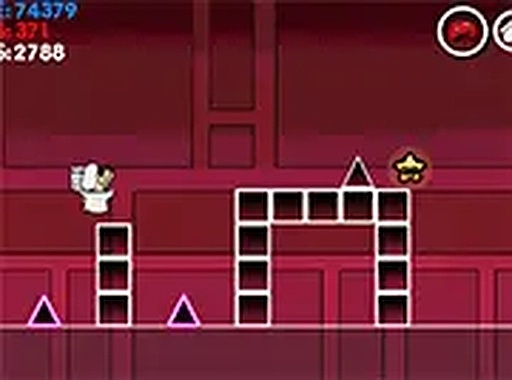
Geometry Rush strips the platformer down to a single repeated action: jump at the right moment. Its difficulty comes from increasing speed and obstacle frequency, not from complex controls. The clean presentation keeps attention on the gameplay, and the scoring system gives each short run a purpose. It is best suited to players who enjoy reflex-based challenges and do not mind restarting frequently. The main limitation is variety—the core loop stays the same, so its appeal depends on how much you enjoy refining the same timing skill.
Geometry Rush is built around a single decision repeated under pressure: when to jump. Your character moves across a series of platforms, and each tap or click sends it to the next one. Obstacles appear along the route, so a jump that is slightly early or late can end the run. The challenge is not learning the control—it is reading the spacing and timing the input correctly as the game gets faster.
The game begins with a manageable pace, giving you room to learn the rhythm of the jumps. As you progress, the speed increases and obstacles show up more often. That combination compresses your reaction window, so patterns you handled early become harder to repeat. The clean visual design keeps attention on the platforms and roadblocks rather than on decorative elements, which matters when a fraction of a second decides the outcome.
A scoring system tracks how far you get, giving each run a clear result to compare against your previous best. Every attempt starts fresh, so there is no penalty beyond losing the current run. That structure encourages short sessions: you can try a few runs, notice where you tend to mistime a jump, and adjust on the next attempt. The game is aimed at players who enjoy skill-based challenges and quick reactions rather than long, story-driven play.
Sign in to comment
You must be logged in before posting a review or rating.
No comments yet. Be the first to comment!









Editorial Notes