 Mahjong Racer Games
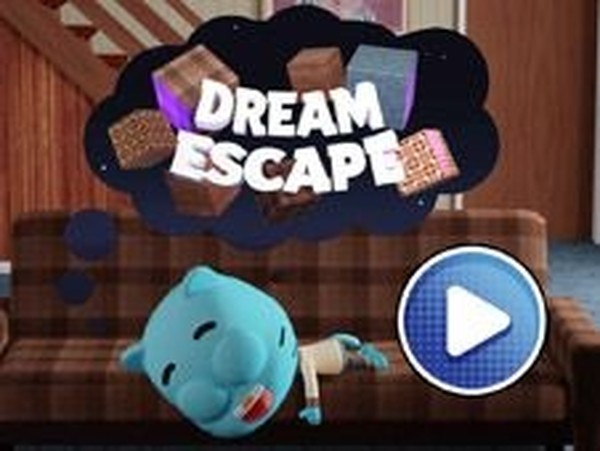
Dream World Puzzle Quest builds its puzzles around cooperation between characters and a move-count score that rewards efficiency. The nine levels each use a different everyday object as the floating stage, which keeps the spatial challenges varied. The introduction of colored arrow blocks at level four adds a color-matching layer without complicating the controls. The game is best suited to players who enjoy quiet logic puzzles and don't mind replaying stages to shave off moves. Its main limitation is that the exact number of characters and the consequence of falling are not detailed, so some trial and error is expected.
Each of the nine levels in Dream World Puzzle Quest takes place on a floating 3D structure shaped like a familiar item — a couch, a television, a school bus. These aren't just backdrops; the object's form defines the paths, ledges, and gaps you must navigate. Because every level is built on a different object, the spatial layout changes completely from one stage to the next, forcing you to relearn how to read the terrain rather than applying a single pattern.
You control more than one character. Clicking a character's icon switches control to them. The key mechanic is cooperation: one character can stand on a button that removes an obstacle blocking another character's route. This means progress depends on coordinating positions. You might move one character onto a ledge to reach a button, then switch to a second character who can now pass through a previously blocked area. The puzzle is less about reflexes and more about sequencing who moves where, and when.
Starting at level four, new blocks appear with colored arrows. To move these blocks, a character must step on a button of the same color. This adds a layer of color-matching to the movement planning. You can't simply push or walk around these blocks; you must identify the correct button, route a character to it, and only then does the path open. Later levels combine this with the character-switching mechanic, so you may need one character to hold a button while another navigates the newly cleared space.
The game counts every step taken by all characters to reach the goal. That total becomes your high score for the level. Lower is better. After finishing a level, you can replay it to try for a more efficient route. This turns each stage into a small optimization problem: the first completion is about understanding the puzzle, and replays are about trimming unnecessary moves. The easiest path is rarely the most obvious one, and the score gives you a concrete reason to experiment with different sequences.
Sign in to comment
You must be logged in before posting a review or rating.
No comments yet. Be the first to comment!



Editorial Notes