 Mahjong Racer Games
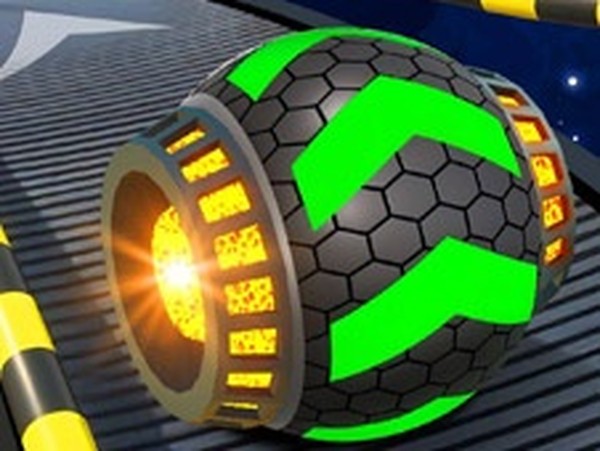
Galactic Rolling Ball Race keeps its scope tight: steer a ball through obstacle courses, collect disks, buy upgrades, and race. The three modes — levels, racing, and local two-player — cover solo and shared-screen play without overcomplicating things. Simple controls and family-friendly presentation make it approachable, while upgrades and a leaderboard give solo runs a reason to continue. The main limitation visible in the source is that competition is local only, so players seeking online races should look elsewhere.
Every run in Galactic Rolling Ball Race follows a straightforward rhythm: move a rolling ball through a space-themed course, avoid traps and barriers, and reach the finish line or pass checkpoints. Movement uses left, right, forward, and backward inputs, with a jump action for clearing obstacles. Looking behind the ball reveals hazards approaching from the rear, which matters on tracks where traps sit behind the player rather than ahead. The core objective is positional — stay on the course, reach the end, and cross checkpoints along the way.
Scattered disks double as the game's currency and as a reason to explore each track rather than rush it. Collected disks fund upgrades, and the upgrade system touches both the ball itself and its trail. Speed boosts and springboards appear as course elements that push the ball faster or launch it higher, while ball upgrades provide additional boosts on top of what the track offers. Because better balls and trails can affect speed or handling, disk collection feeds directly into how a run feels on later attempts.
Three modes shape the experience. Levels mode sends the ball across long distances, functioning as the main solo progression path. Racing mode pits the player against another ball in a direct contest. Two-player mode lets two people share one computer, each using separate keyboard controls to race simultaneously. The leaderboard tracks progress and compares performance against other players, giving solo runs a competitive reference point even outside head-to-head play.
The controls are deliberately simple, and the family-friendly presentation keeps the tone light. That combination points toward casual players, younger audiences, and pairs who want a quick local race without a steep learning curve. The upgrade layer and leaderboard add enough persistence for players who want to keep improving, while the two-player option gives the game a social use case that solo racing titles lack.
Sign in to comment
You must be logged in before posting a review or rating.
No comments yet. Be the first to comment!








Editorial Notes