 Mahjong Racer Games
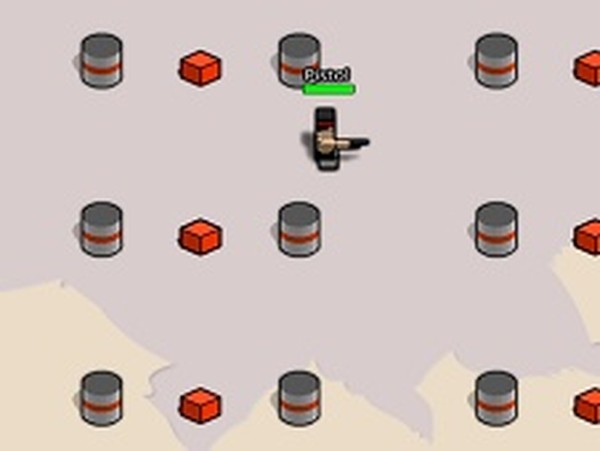
BoxHead Duo Action Game targets players who want quick, accessible arcade action for two. Its strength is flexibility: the same maps and controls serve solo survival, cooperative defense, and head-to-head scoring, so a single session can shift tone without relearning inputs. The sixteen-map lineup adds meaningful variety, from open arenas to cramped corridors. The limitation is depth—mechanics stay simple, and players seeking complex progression may find it thin. Best suited for casual local play.
BoxHead Duo Action Game drops players into arcade-style arenas where waves of fantasy enemies must be overcome. The core loop is straightforward: stay alive, eliminate threats, and manage the space around you. In single and cooperative modes, the only goal is survival. Competitive mode flips the script, turning the same arenas into a race for points rather than pure endurance. That split gives the game two distinct rhythms—one about holding ground together, the other about outpacing a rival.
Player 1 moves with the arrow keys, uses items with the forward slash key, and switches tools using the period and comma keys. Player 2 moves with WASD, uses items with Space, and switches tools with E and Q. These bindings are intentionally simple, so both players can act without menu fumbling. Tool switching matters because different situations call for different responses, and the item key adds a tactical layer beyond basic movement.
The game includes sixteen maps: Big One, Boxy, Buttons, Mazy, Gladiator, Tight Columns, Castle, Big Boxy, Recty, Patchy, Forest Box, Tight 2, Massive, Thin Line, 4 Castles, and The Strips. These aren't just cosmetic swaps. Tight Columns and Thin Line restrict movement, forcing careful positioning, while Massive and Big Boxy provide open ground where enemies can approach from multiple angles. Castle and 4 Castles introduce structural obstacles that change how you kite and regroup. Learning each layout is part of the strategy.
Cooperative mode rewards communication and spatial awareness. Teammates need to cover each other's blind spots and avoid clustering when enemies surround them. Competitive mode shifts priority toward power-up collection and timing, since outscoring an opponent often means denying them resources rather than simply surviving longer. Both modes use the same maps and controls, so switching between them doesn't require relearning the basics.
Practice moving and using items without stopping. On tighter maps, keep a escape route open rather than backing into a corner. In co-op, call out which side you're covering. In competitive play, grab power-ups early and use them when they create the biggest scoring swing. Staying aware of your surroundings prevents the most common mistake: getting surrounded while focused on a single target.
Sign in to comment
You must be logged in before posting a review or rating.
No comments yet. Be the first to comment!





Editorial Notes