 Mahjong Racer Games
Mahjong Racer Games
Mahjong Racer Games
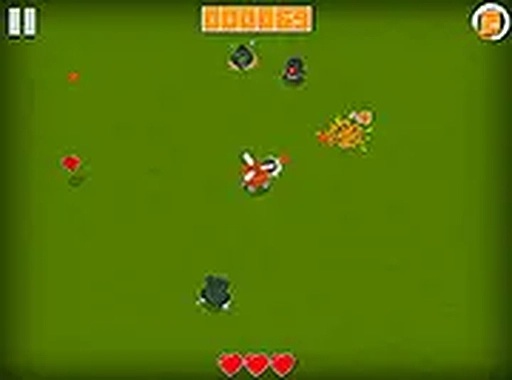
Robot Timing Challenge succeeds by focusing on a single, well-executed mechanic. The wave-based design offers a satisfying progression where each round feels like a natural step up in difficulty. The energy system adds a strategic layer that prevents the game from becoming a mindless clicking exercise. Visual clarity and responsive controls ensure that failures feel like personal mistakes rather than technical issues. While the game lacks variety in visuals or sound, its core loop is strong enough to keep players coming back for short, focused sessions. It is an excellent choice for anyone looking for a quick mental workout that tests both speed and planning.
Robot Timing Challenge centers on a straightforward interaction: players click on robot figures that emerge on the screen. Each successful click adds to the score, while missed targets or collisions reduce an energy meter. The game presents these encounters in waves, and clearing one wave unlocks the next. This loop creates a rhythm where players must balance speed with accuracy. Early waves move slowly, allowing newcomers to adjust, but later waves introduce faster appearances and larger groups. The energy system adds a layer of strategy, as players must decide whether to take risks on distant targets or focus on nearby threats to conserve energy.
The progression in Robot Timing Challenge is carefully paced. Each wave introduces new patterns, such as robots that move in arcs or appear in quick succession. The game does not rely on random elements; instead, it uses predetermined sequences that players can learn through repetition. This design rewards practice and pattern recognition. As players advance, the intervals between robot appearances shorten, requiring quicker decision-making. The challenge lies not in complex controls but in maintaining focus over several waves. The game avoids sudden difficulty spikes, instead offering a smooth ramp that keeps players engaged without frustration.
The interface of Robot Timing Challenge is minimal and functional. Robots are clearly visible against a clean background, and the cursor changes to indicate a valid target. The energy bar is displayed prominently, allowing players to monitor their status without distraction. Controls are limited to mouse clicks, which keeps the game accessible to players of all ages. Full screen mode is supported, which can help reduce visual clutter and improve reaction times. The game runs smoothly in standard web browsers, with no noticeable lag during fast-paced waves. This simplicity in design ensures that the focus remains on the player's performance rather than on learning complex mechanics.
While the core action is clicking, Robot Timing Challenge incorporates strategic decisions through its energy system. Each missed click or collision with a robot reduces energy, and the game ends when energy reaches zero. Players must prioritize targets: fast-moving robots that are about to leave the screen may require immediate attention, while slower robots can be dealt with later. Some waves include robots that move in groups, where a single click can hit multiple targets if timed correctly. This adds a layer of planning, as players must decide whether to click individual robots quickly or wait for an optimal moment to clear a cluster. The energy system also discourages random clicking, rewarding careful aim and patience.









Comments
Sign in to comment
You must be logged in before posting a review or rating.
No account? Create one
No comments yet. Be the first to comment!