 Mahjong Racer Games
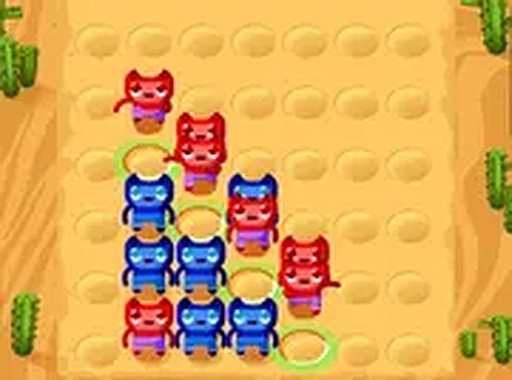
Feline Grid Match takes the familiar four-in-a-row formula and wraps it in a bright cat-themed interface that runs in any modern browser. The turn-based structure gives players room to think, and the adjustable AI plus local multiplayer covers both solo and same-device play. The main limitation is that the description does not detail progression systems or online play, so it is best suited for players who want a quick, low-pressure strategy puzzle rather than a deep campaign.
Feline Grid Match adapts the classic alignment puzzle by replacing traditional discs with cheerful cat icons. The objective is straightforward: be the first to create an unbroken line of four matching tokens. Lines can run horizontally, vertically, or diagonally. Because the game is turn-based, each player has time to study the board before committing to a move, which shifts the challenge from reflexes to observation and planning.
Simple rules do not mean shallow decisions. Every token placed can either build toward a future line or cut off an opponent's attempt. Controlling the center columns tends to open more line-building options, while flanking strategies can work just as well when they force the opponent to react. Success depends on thinking one or two moves ahead and knowing when to attack versus when to block. Pattern recognition matters as much as raw planning.
The interface uses bright, clear colors and playful animations that celebrate matches without pulling attention away from the grid. Sound effects are gentle and optional, so the game works in quiet settings. Feline Grid Match runs directly in a web browser on desktop and mobile, with no download or installation required. Controls are simple: click or tap a column to drop a token. A full-screen mode is available, and the game loads quickly on a stable connection.
Players can face a computer-controlled opponent with adjustable difficulty levels, or challenge a friend on the same device in local multiplayer. The AI offers a consistent challenge that scales with the selected setting, while local multiplayer suits family game nights or quick matches between two people sharing a screen. Both modes use the same core rules, so switching between them does not require learning a different system.
Sign in to comment
You must be logged in before posting a review or rating.
No comments yet. Be the first to comment!









Editorial Notes